Decoding the opaque world of household electricity consumption.
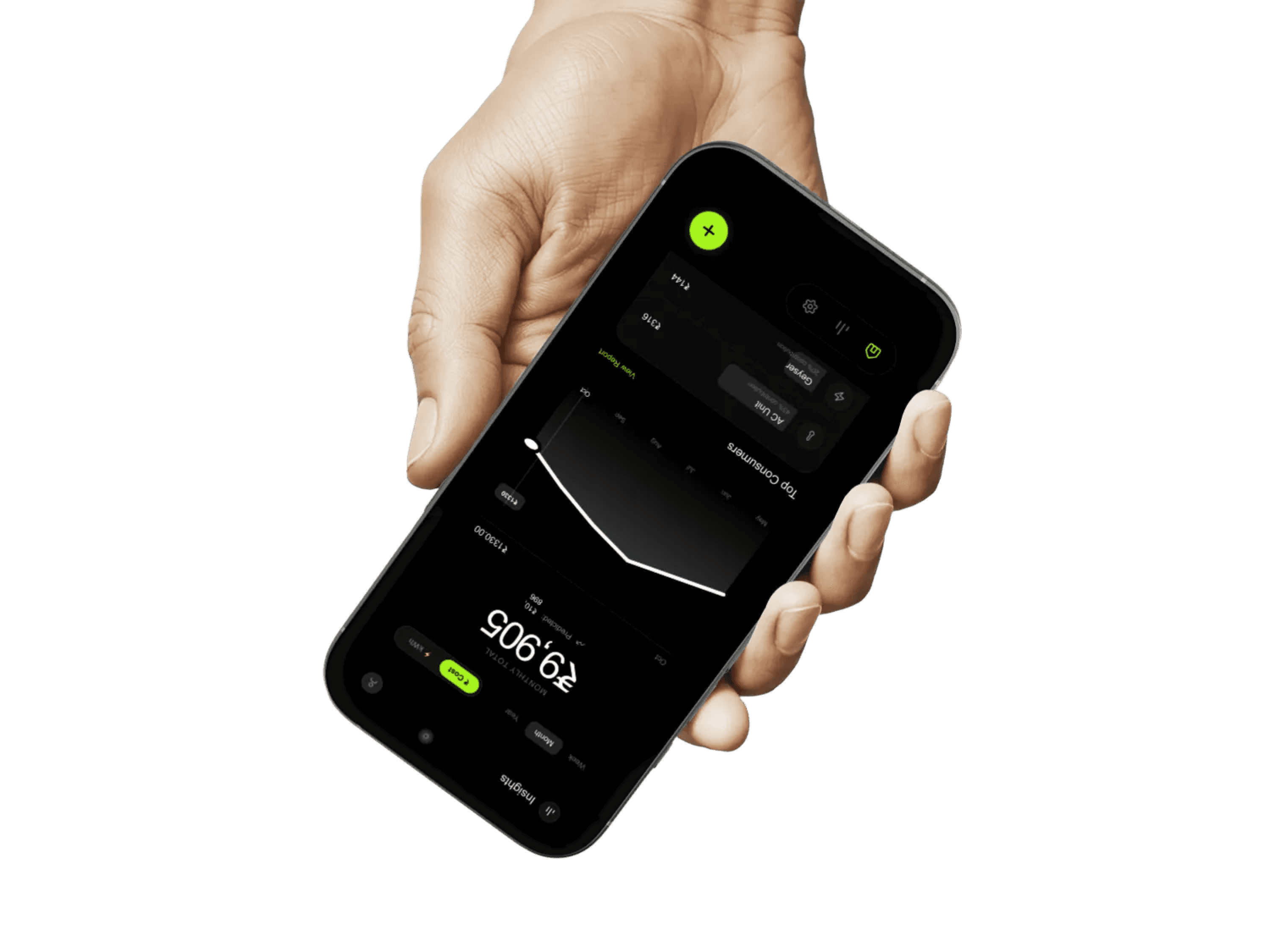
Overview
Electricity bills in India are hard to read. Most people just pay the amount without knowing why it’s so high or which appliance is using the most power.
For my graduation project, I designed Current, an app that turns confusing numbers into clear information. The goal was to help people see exactly what they are paying for so they can save money and use less energy.
My Role
I handled the entire project from start to finish. This meant talking to families in Bengaluru to understand their frustrations with bills, mapping out how the app should work, and designing all the screens. I focused on making the data look simple so that anyone, regardless of how much they know about technology, could use the app to track their spending.
Context
This project was my graduation thesis at Srishti Institute of Design in Bengaluru. I focused on the energy sector because India faces a growing challenge with electricity overconsumption and scarcity. Despite the high cost, the way we use and pay for power is completely opaque. For most families, the monthly bill is a confusing document that offers no insight into which habits or appliances are driving up the cost. I identified this as a critical gap where design could intervene transforming a complex utility into a simple, transparent tool for making more sustainable and affordable household choices.
How might we
How might we turn an invisible, confusing utility into a clear and manageable financial choice?
Solution Highlights
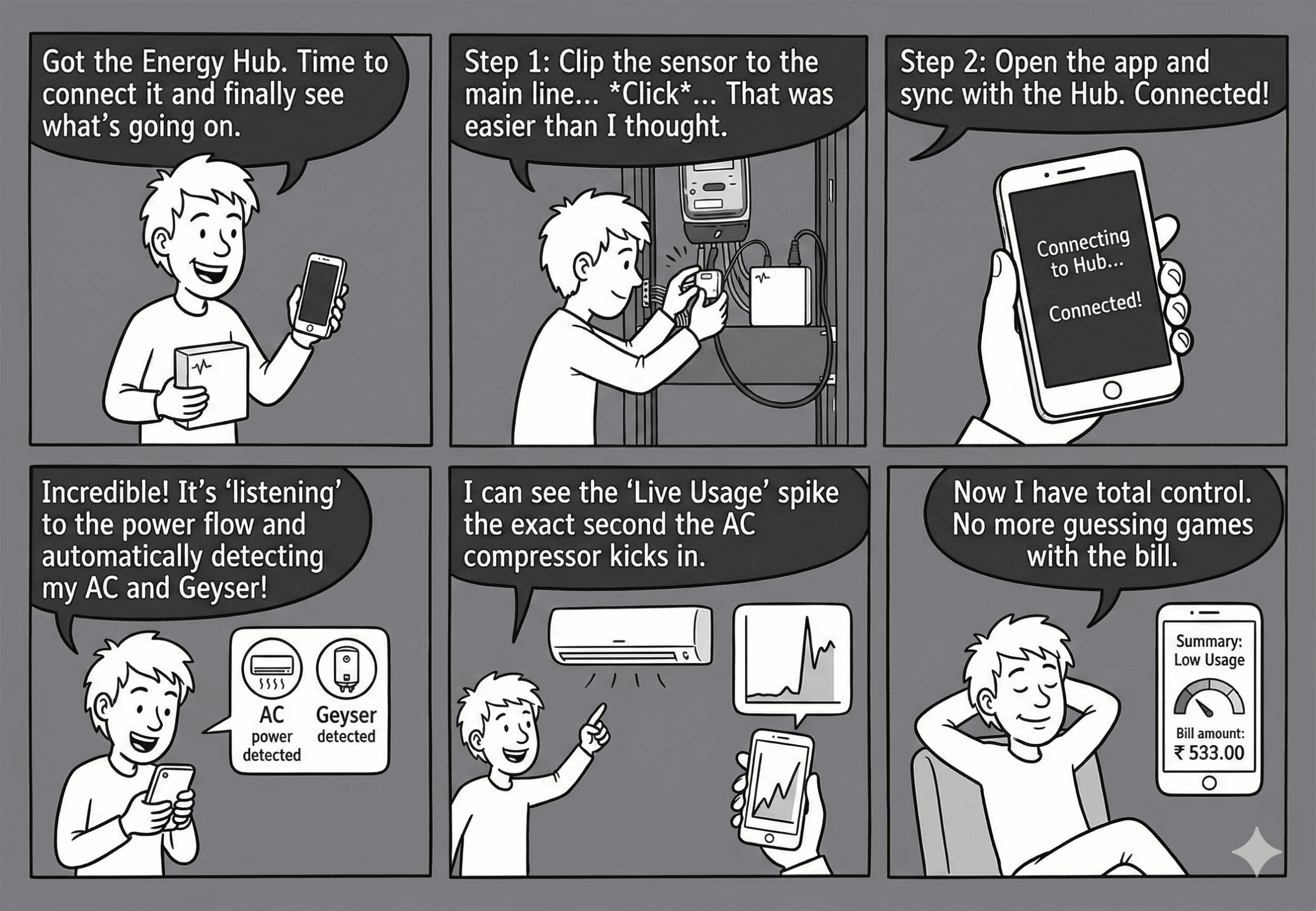
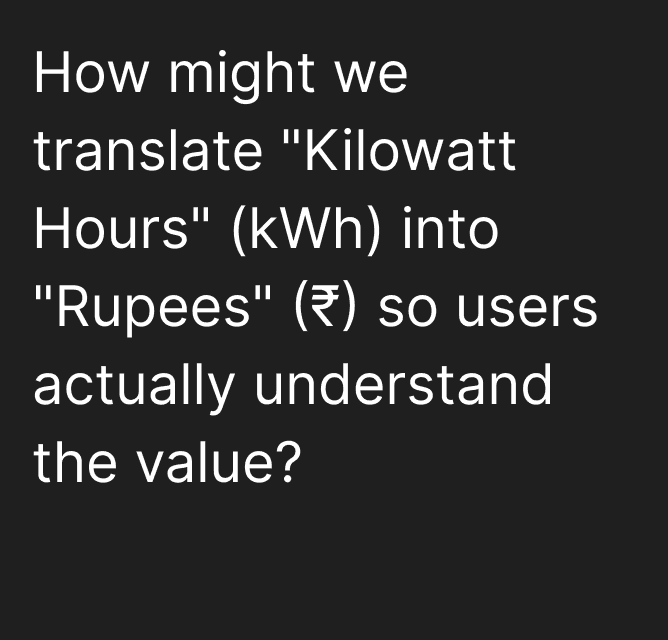
Energy Hub is a mobile app designed to bridge the gap between energy consumption and financial awareness. By taking complex data from your meter and translating it into simple, real-time insights, the app helps you see the "hidden costs" of your home. It moves beyond just paying a bil it gives you a daily strategy to save money before the month ends.

My Process
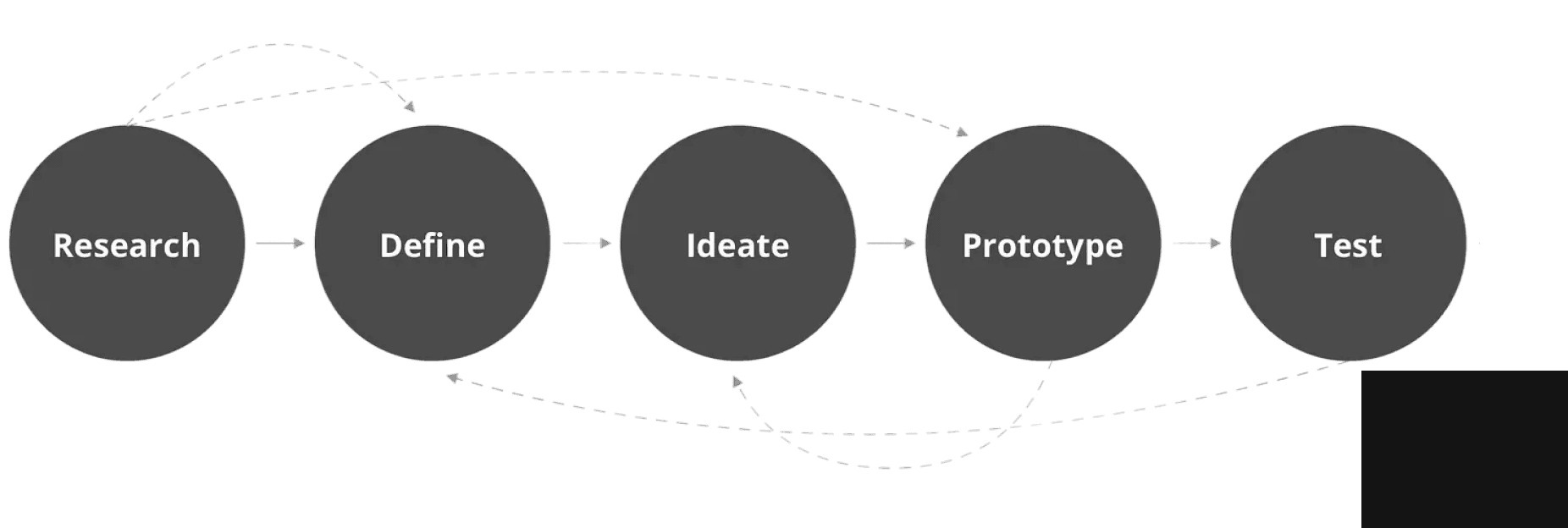
Research
I began by observing my own surroundings to answer a simple question: Is this a real pain point? I investigated the typical user journey—from daily appliance usage to the monthly UPI payment—to find out where the disconnect between 'usage' and 'awareness' actually happens
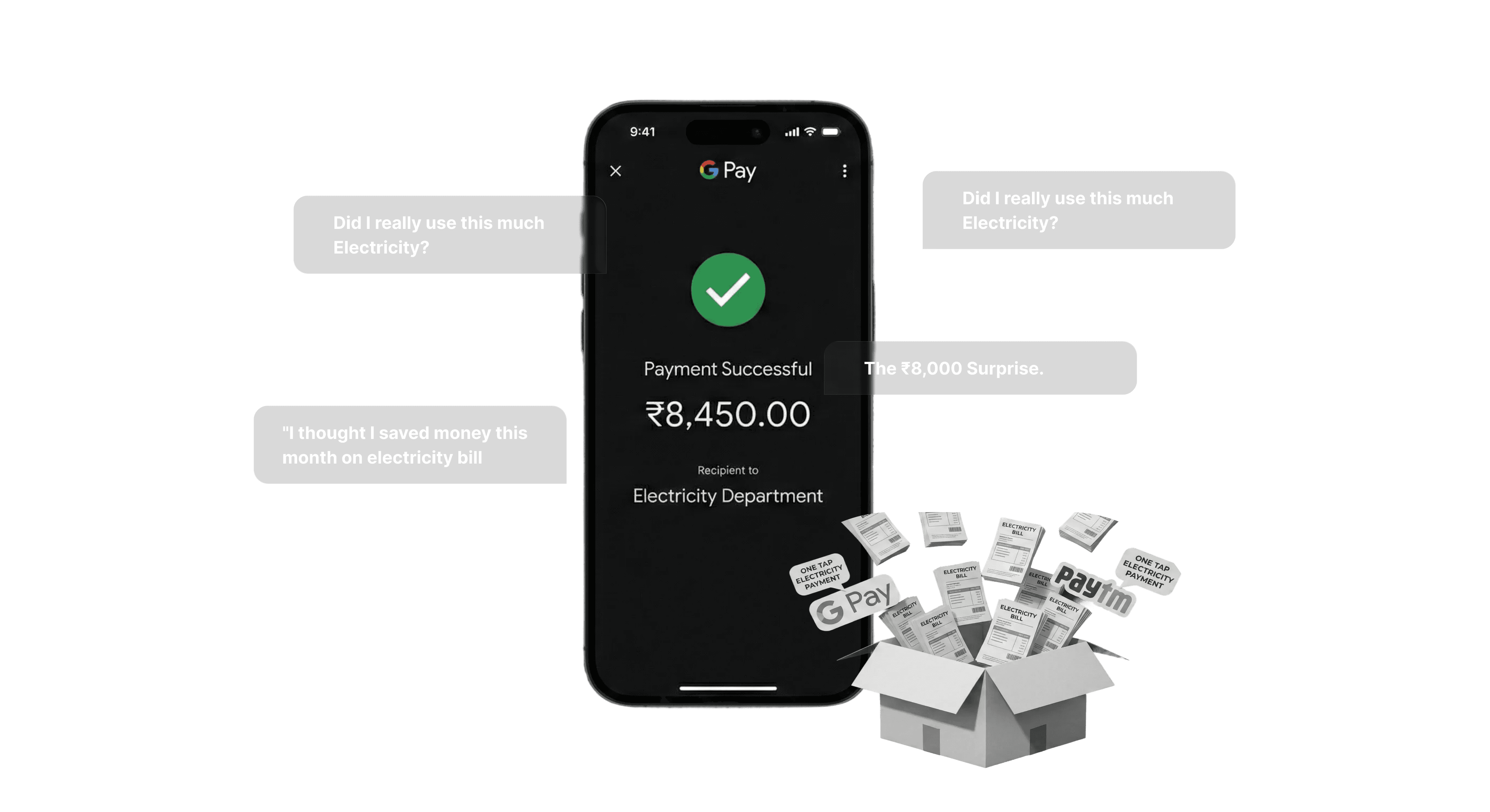
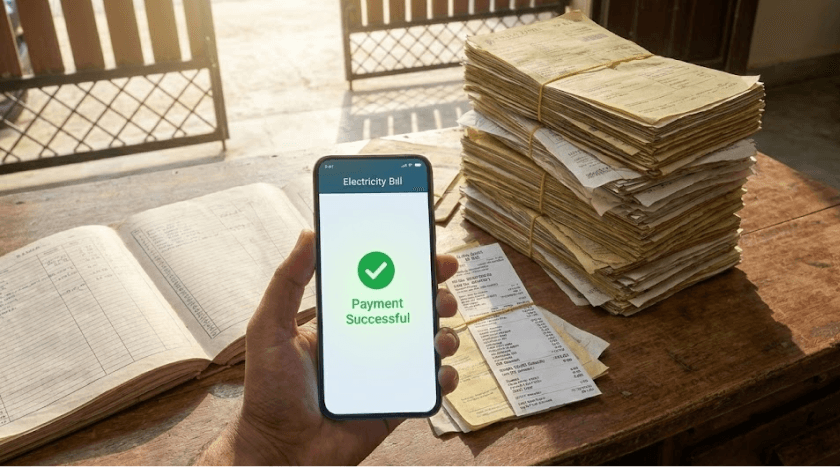
The Digital Blindfold
We have optimized the pain of paying, but lost the power of understanding.
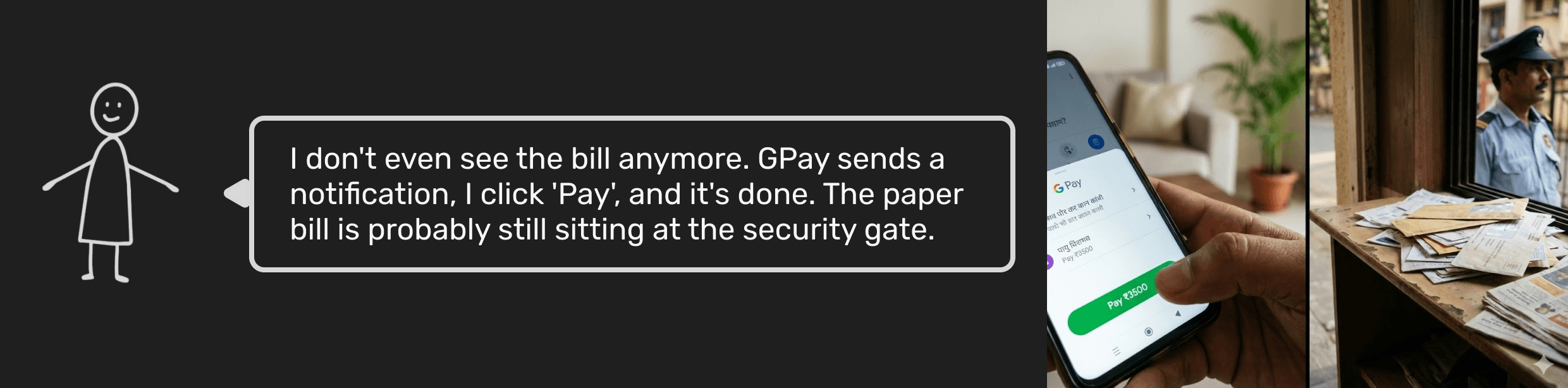
I live as tenant I pay on time via GPay, yet the physical bills sit uncollected at the gate for months. We are paying for a service we do not measure.
Understanding users
To validate my observations, I conducted qualitative interviews with 5 distinct user types, ranging from solo bachelors to large families. The goal was to decode their daily habits: How do they currently track consumption, and why has the physical bill become irrelevant in their lives?
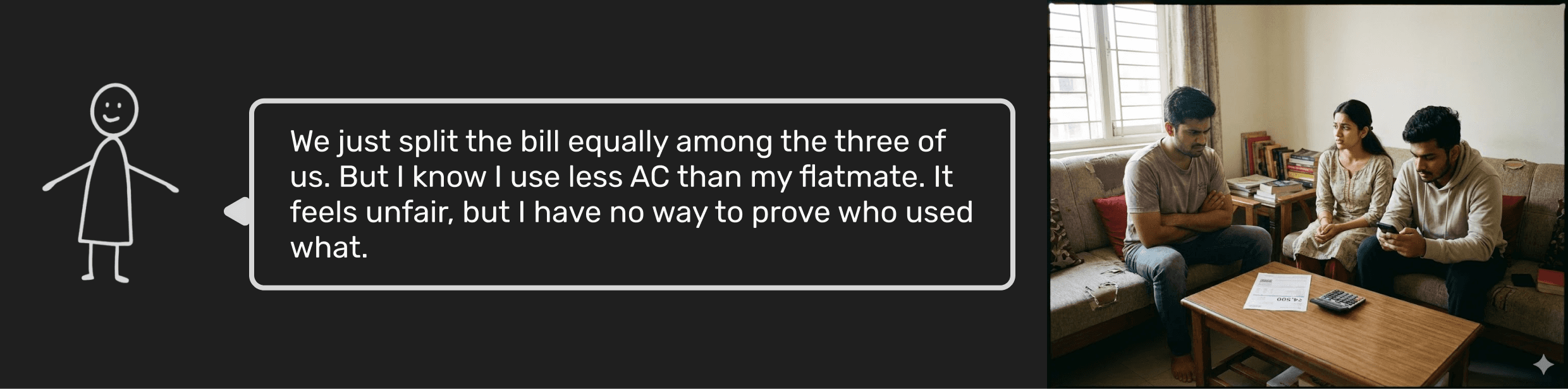
Insights found in the interview
Invisible Consumption: Users find it impossible to save money because they cannot see which appliance is driving up the cost.
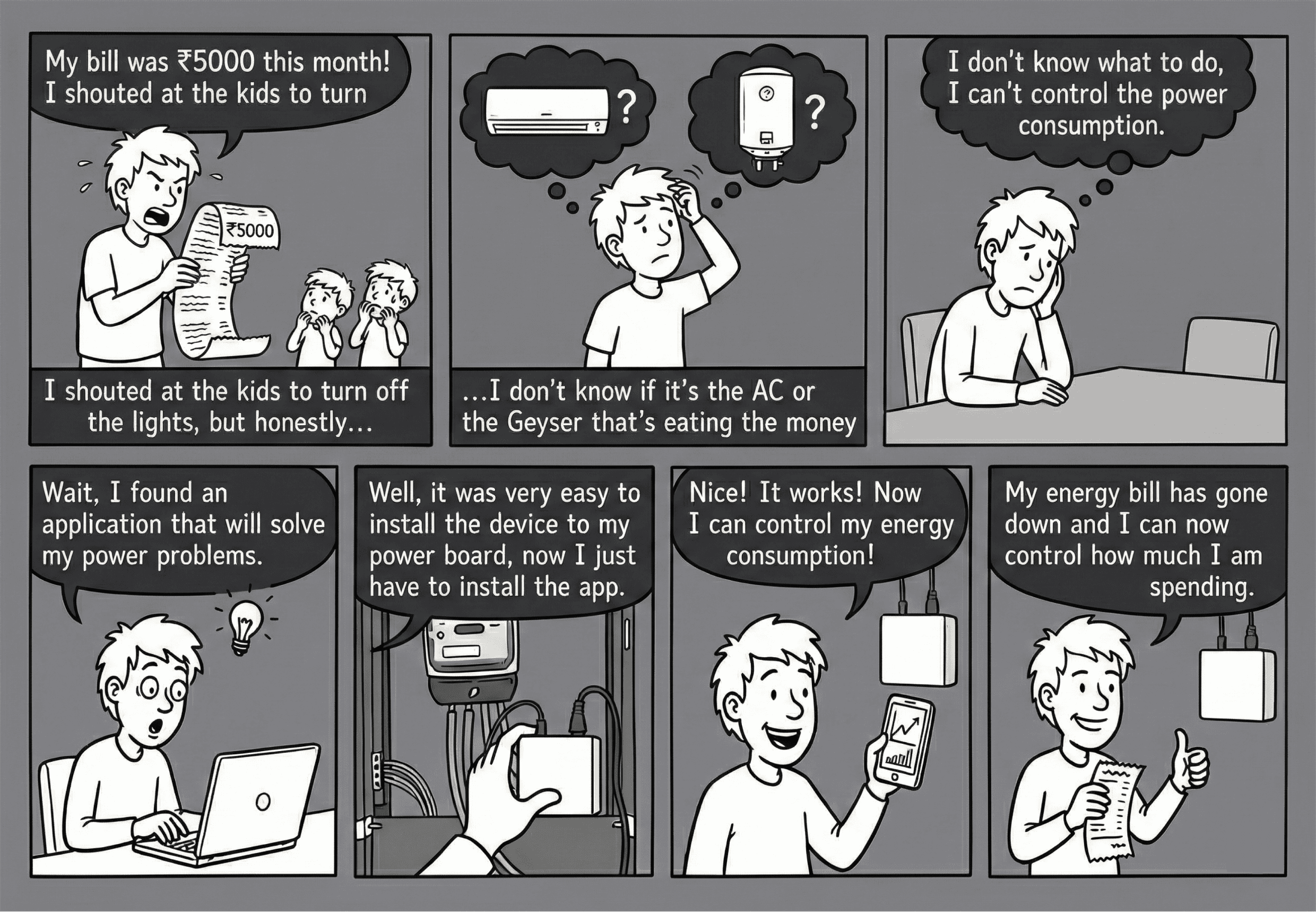
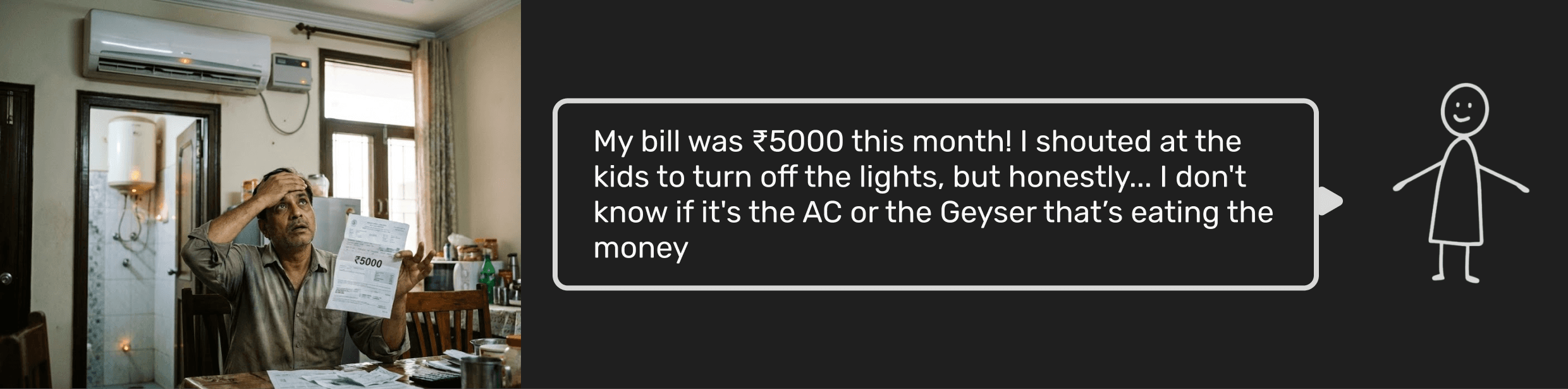
Family Habits: High bills in large families often stem from "unconscious" usage—kids leaving lights on, running the AC, or using geysers for too long.
Usage Imbalance: In shared flats, friction arises when one flatmate or domestic help uses heavy appliances (like washing machines) more than others.
Zero Control: Because this daily waste is invisible, users feel helpless until the final bill arrives.
The define phase
Consumption challenge
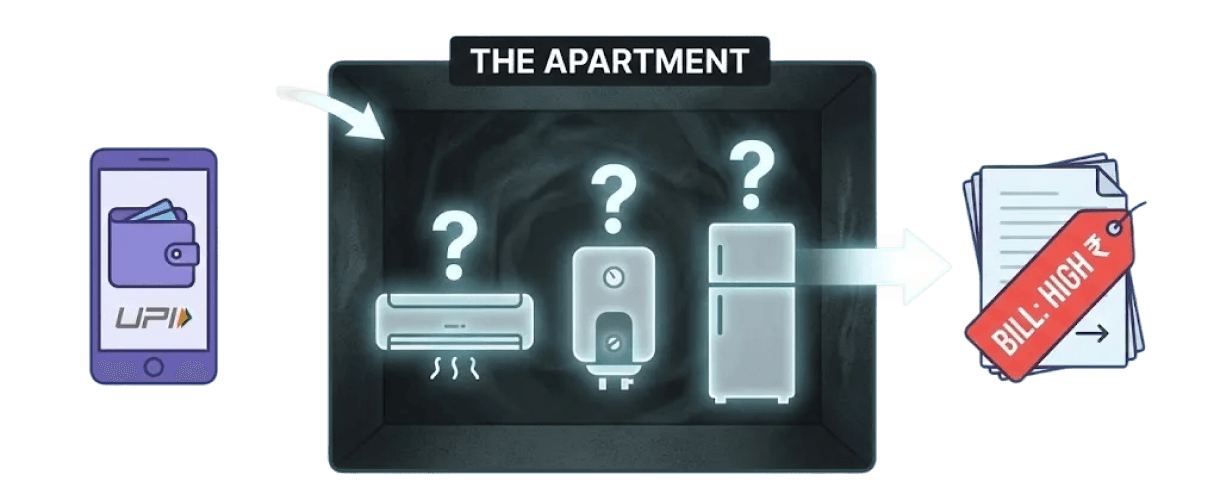
Currently, the home is a 'Black Box.' Users pay the total amount via UPI, but they have zero visibility into which appliance is actually burning the cash inside.
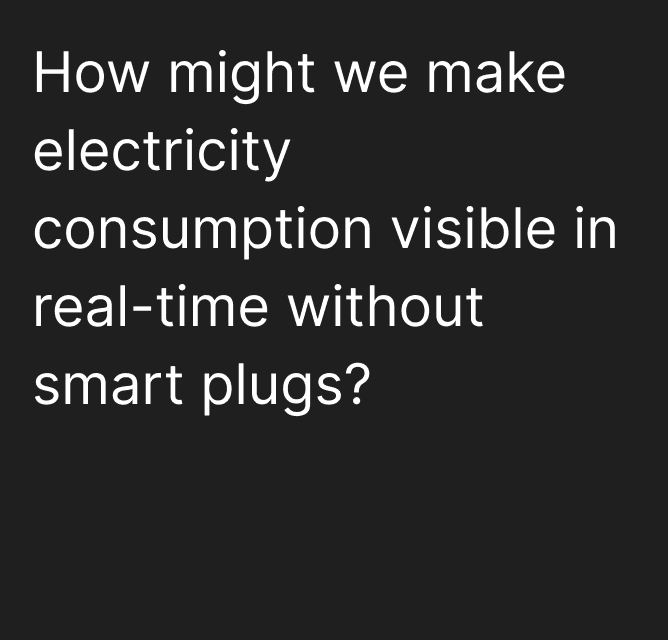
Urban tenants in India need a way to track their daily electricity consumption without buying expensive hardware, because the current monthly bill arrives too late to change their habits.”
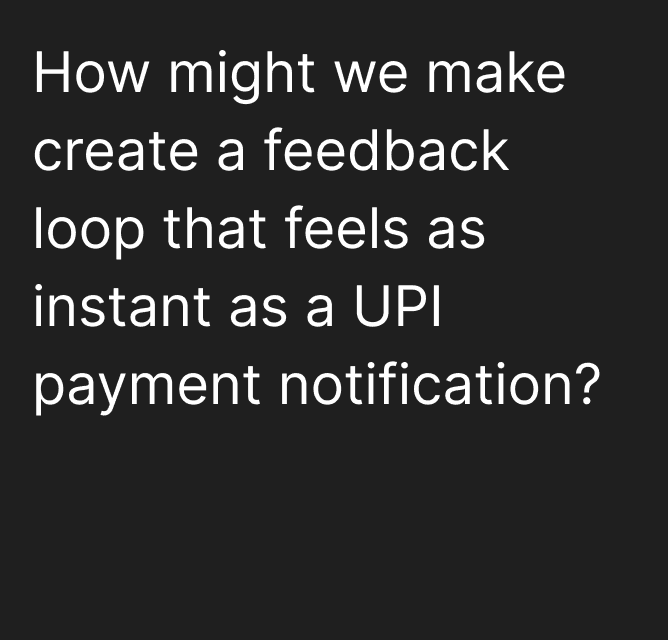
How Might We
To validate my observations, I conducted qualitative interviews with 5 distinct user types, ranging from solo bachelors to large families. The goal was to decode their daily habits: How do they currently track consumption, and why has the physical bill become irrelevant in their lives?
Ideation
Finding a balance between accuracy, cost, and convenience.
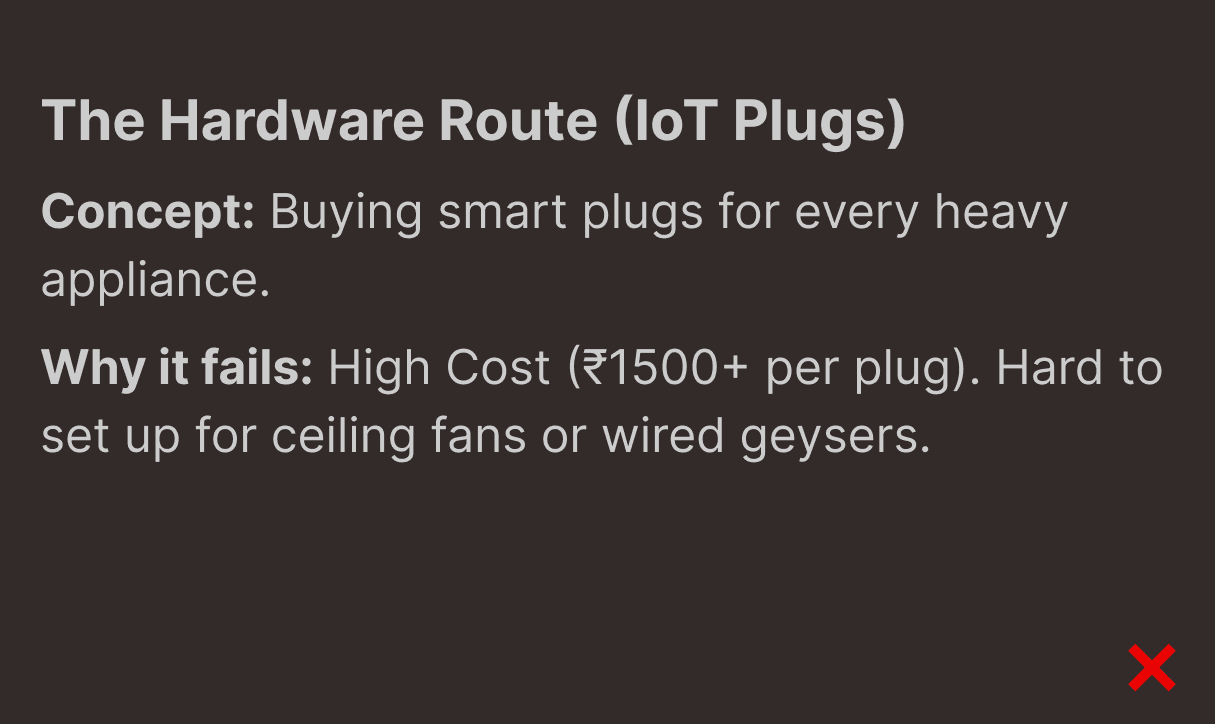
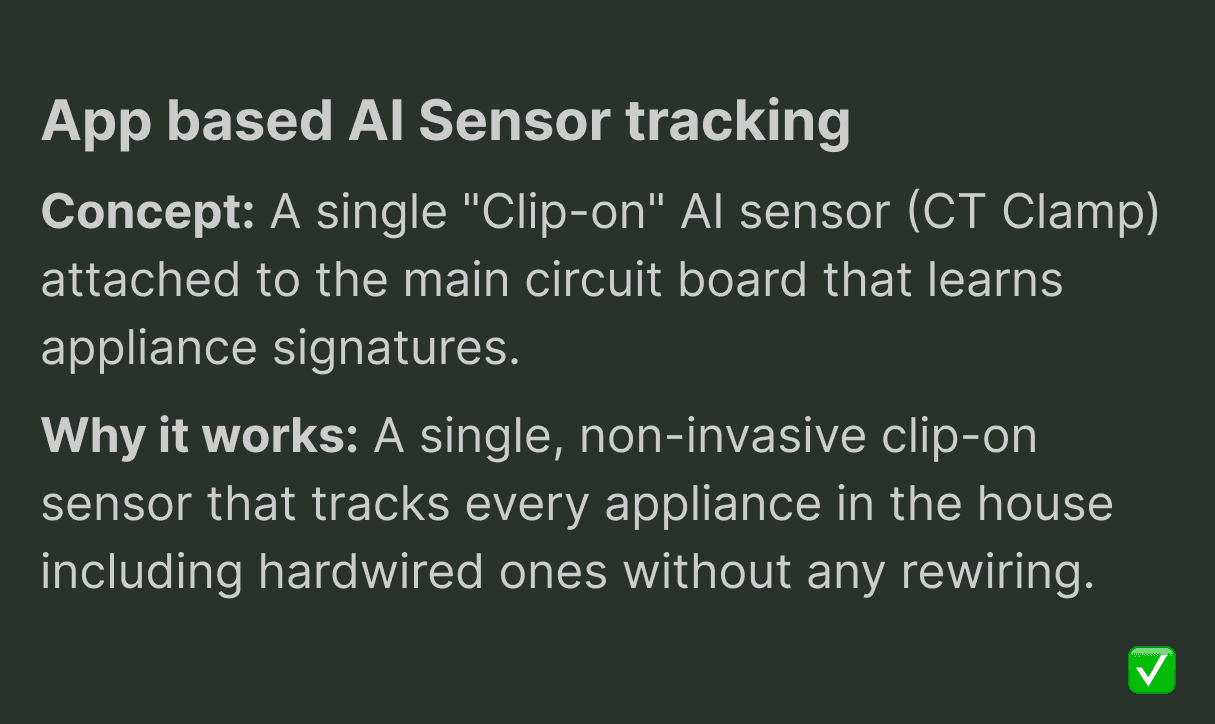
Exploring potential solutions
Although there where multiple solutions solving for different need. These two where mostly twoards solving it.
Let’s see how this solves for one user problems
Scenario 1: My bill was ₹5000 this month! I shouted at the kids to turn off the lights, but honestly... I don't know if it's the AC or the Geyser that’s eating the money